
Block Feature within Cash or Crash Live The Way UK Applies This Feature
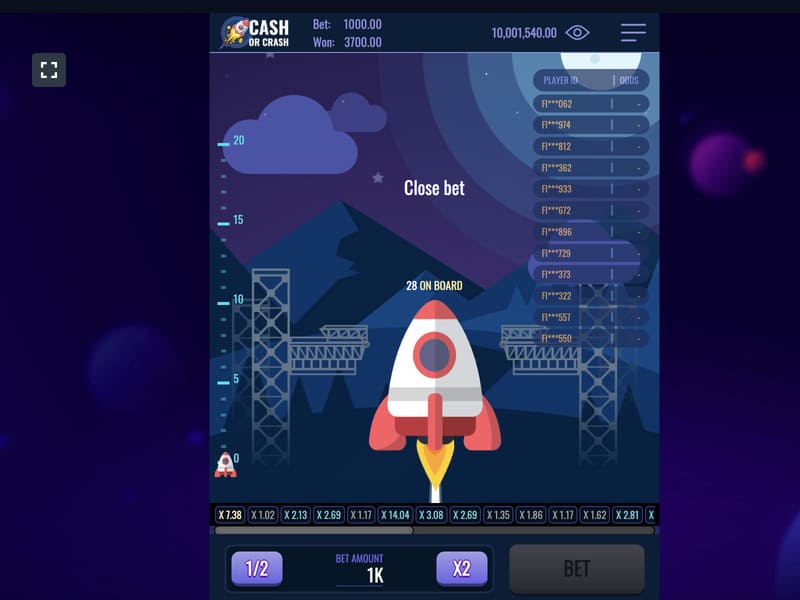
When we examine the inner workings of live gaming shows like official cash or crash live live games, we find elements designed to provide players a sense of control within a high-risk setting. The Block function shines as among the most important gameplay tools available to UK players. Unlike the central game of randomness, where a variable multiplier can fail at any point, the Block enables a user to actively ‘lock in’ a portion of their possible gains before the inevitable crash happens. It converts a entirely passive experience into a more interactive, decision-based version. We view its use as a vital risk-management tactic, distinguishing casual play from more thoughtful methods. For the UK players, where playing is often seen through a lens of both fun and clever involvement, learning to use this feature is key to navigating the game’s built-in conflict between desire for more and safety.
Precisely what the Block Function Really Does
Fundamentally, the Block function in Cash or Crash Live is a straightforward yet potent safety mechanism. As a round progresses, as the multiplier climbs, a user can press the Block button to lock in a part of their prospective winnings. This step establishes a guaranteed floor for the round’s earnings. If it busts at a value below where they placed their block, they still receive the protected value. If it goes beyond the protection threshold, their potential earnings keep increasing, but the protected amount is secure. It’s vital to grasp that activating the Block does not terminate your involvement in the current round; your active multiplier keeps running, but you possess a safety net. We view this dual-mode experience—being both safe and still in the game—as the feature’s mental appeal. For UK players, it tackles the classic dilemma of deciding when to cash out, a notion recognized from contexts as varied as stock trading and a nail-biting pub quiz.
Distinguishing Block to Auto-Cash-Out
It’s crucial to separate the Block function from the distinct Auto-Cash-Out feature, as UK players sometimes conflate the two. Auto-Cash-Out is a set-and-forget tool where you predetermine a multiplier at which your entire bet is automatically cashed out, concluding your engagement in that round fully. The Block function is more subtle. It does not end your round; it simply secures a segment of your winnings while your live bet persists to ride. This signifies you can still benefit from a rising multiplier after blocking, which is not feasible with Auto-Cash-Out. We regard Auto-Cash-Out as a tool for discipline, imposing a rigid profit target. The Block, on the other hand, is a tool for risk management and opportunity maximisation. A sophisticated UK player might use both in conjunction—for instance, establishing a moderate Auto-Cash-Out at 10x but using a manual Block at 4x to secure a minimum profit well before that target.
Common Blocking Mistakes worth Avoiding
Through our analysis of gameplay, we’ve noted several common pitfalls UK players should be mindful of when using the Block. The most common mistake is blocking out of fear at the first hint of a rising multiplier, often at a level so low it barely covers the initial stake. This defeats the function’s purpose of securing substantial profit. Conversely, greed causes the mistake of never blocking at all, treating every round as an all-or-nothing gamble, which statistically erases gains over time. Another subtle error is positioning the block at a round, psychologically important number like 5.0x, which many other players are also apt to use. If a crash is designed to frequently occur just below such common thresholds, this strategy can fail. We suggest players to change their block points and base them on a pre-defined strategy rather than emotional impulses during the thick of the round.
Psychological Influence on Gaming
The implementation of the Block function profoundly modifies the mental interplay of Cash or Crash Live. In its absence, the game is a pure test of nerve, a binary “cash out or bust” scenario that often leads to regret—caused by quitting too soon or crashing with nothing. The Block addresses this by furnishing a third, reassuring choice. It reduces the anxiety of losing everything, which in turn can promote calmer and more gainful decisions. We note that UK players using the Block frequently describe feeling more empowered, which boosts their pleasure and involvement with the game. Nevertheless, it also creates new forms of mental stress, like the vexation of blocking at 3x just to observe the multiplier climb to 10x. This “fear of missing out” (FOMO) is a powerful force, and learning to control the emotional response to a successful or poorly timed block is as important as mastering the timing itself.
Well-planned Scheduling for UK Users
Tactical use of the Block centers on pacing, and UK participants commonly form patterns according to noted gameplay patterns and personal tolerance for risk. There exists no globally optimal moment, making it a subject of much discussion. Some suggest an early block, possibly at a conservative 1.5x or 2x multiplier, to ensure a modest but reliable profit, growing a capital slowly and safely. Some, chasing bigger wins, will allow the multiplier climb much higher before activating their block. We analyse the fact that many experienced players in the UK use a mixed method, changing their block level according to the behavior of latest rounds. As an illustration, following a number of consecutive low multiplier busts, some might activate their block sooner, anticipating a trend. In contrast, upon a large multiplier, the next game might see users delaying their block, anticipating it happening again. The crucial point is that the decision is proactive and context-driven, shifting the player from a mere spectator to an engaged participant, managing their own risk.
The way UK Guidelines Influence Feature Use
The application of tools like the Block does not occur in a vacuum; it is shaped by the UK’s tight gambling regulations and responsible gaming framework. The UK Gambling Commission stipulates that games provide transparent information and features that encourage player control. The Block function is in perfect alignment with this ethos, as it is a concrete tool for controlling risk and minimizing losses. Furthermore, the availability of detailed game stats and history, which UK-licensed platforms are required to provide, feeds directly into Block strategy. Gamers can review past rounds to optimize their timing, incorporating analytical strategy. It is also noted that the UK sector’s focus on transparency means the workings of the Block are clearly explained, avoiding confusion. This framework of regulations fosters a more measured, strategic approach to the experience, where the Block is regarded not merely a button, but a key element of informed play.
Building a Individual Block Approach
Formulating a steady personal strategy for the Block is the trademark of a thoughtful Cash or Crash Live player in the UK. We recommend starting with a bankroll handling plan: decide what percentage of your session stake you are willing to risk per round and what constitutes a successful profit target. Your Block plan should serve these goals. One method is the “tiered block,” where you reserve a modest percentage of your potential winnings at a small multiplier, another portion at a middle multiplier, and let the balance ride. Another is the “fixed profit” plan, where you determine the specific multiplier needed to secure a particular profit and stop there every time, disregarding the appeal of higher multipliers. Crucially, any strategy must be written down and adhered to before you start playing, as in-play emotions will cloud reasoning. The Block is a strong tool, but its power is only realized through disciplined, pre-planned application.